My mother’s bibles: Unworthiness
After Genesis, I read through all the pages of highlights and handwritten notes. I thought about doing book-by-book comparisons and sharing various verses, but I realized that it wasn’t about “proving” what I was seeing or making it a scholarly qualitative experience. I decided to go with emotions, with themes.
Some she and I shared, some we didn’t. But one thread was undeniably clear - a sense of fundamental unworthiness, feeling shame for existing, for taking up space in the world. And it’s paired with an obsessive effort to try to fix it, to find a formula or an answer or enough discipline to escape the shame, to become worthy.
Unworthiness
For those unfamiliar with some of the more extreme factions of Christianity - acknowledging your unworthiness is foundational to the practice. It’s not even just about acknowledging what you’ve done wrong, the sins you’ve actually committed, you seek forgiveness for just being human. For being born into and under the circumstances God created.
You accept Jesus into your heart to be saved from it all and avoid eternal damnation. Ideally, you move through the inherent self-disgust and hopelessness into joy and gratitude for being saved, and then you try to be the kind of person “worthy” of salvation.
But for a certain kind of person, someone like my mother, it’s just divine permission to hate yourself forever.

She handed this right down to me. Consciously in some ways, she was directly and severely critical of me, she especially taught me to hate my body and obsess over my appearance. But when I cared too much about it she called me “shallow” and “vain’. And I’m sure she did it unconsciously in many other ways. She never quite believed in me, was quick to encourage me to give up, made sure that I always had low expectations, etc.
The more I’ve grieved and processed our relationship, it feels like I reminded her of herself, and given her self-hatred and the depths of her shame for existing - that was hard for her to tolerate.
Forgiveness is a sticky term for me, mostly because I don’t like the way it tends to be talked about or defined in our culture. It’s talked about as an either/or, yes/no binary - it’s something you either give or do, or you don’t.
Sometimes there are other weird binaries about who forgiveness is “for”, is it for you or the person who hurt you? Sometimes there’s virtuousness applied to it, a virtuous/healthy/healed person “forgives”.
I’ve experienced forgiveness as fluid - sometimes varying day-by-day or harm-to-harm. Sometimes I forgive her, sometimes I don’t. Sometimes I forgive her for certain things but not others.
One of the things I struggle to forgive her for is not seeing me as a kid. Not seeing that many of the ways I was annoying, impulsive or emotionally overwhelming weren’t character defects, they were features of my particular nervous system: I was recently diagnosed with autism and ADHD.
While worthiness and othering wounds aren’t unique to the neurodiverse, there’s a particular ache in just knowing you’re actually different from most people but you can’t articulate why.
It’s not only the attachment wounds, abuse, or neglect that make you feel unwanted or not-good-enough, you can tell that there’s something about people you don’t get and they can sense it too.
I’ve been wondering if she also felt that particular ache. If there was another layer to her sense of herself and who she was that she couldn’t articulate. I’ll never know, but I know she chose to follow a religion that supported her already established view of herself.
What I do consistently feel toward my mother is understanding. I largely get it. I get how she came to be who she was, and how she lived and parented from that place - I get how she ignored all the problems and struggles I had, and how coaching me to hide everything felt like protecting me.
I also consistently feel compassion for how her shame literally controlled her life and, in my opinion, ended it prematurely.
There’s an interesting psychological phenomenon that I’ve seen in myself and many others: the thing we think we struggle with is not actually the true thing. In fact, it’s often the opposite.
In this case, my mother clearly believed that the root of her unworthiness was pride, that she was prideful.
If only she could be humble, show humility, then she would be healed.
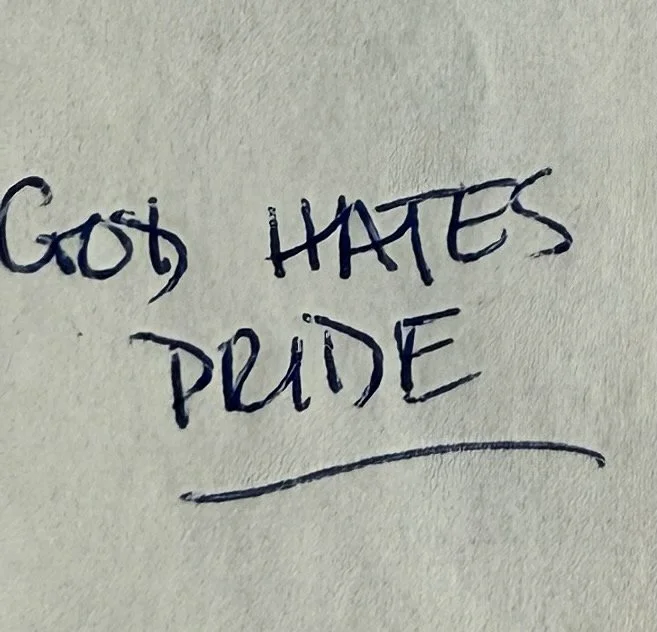
She’d be fixed.
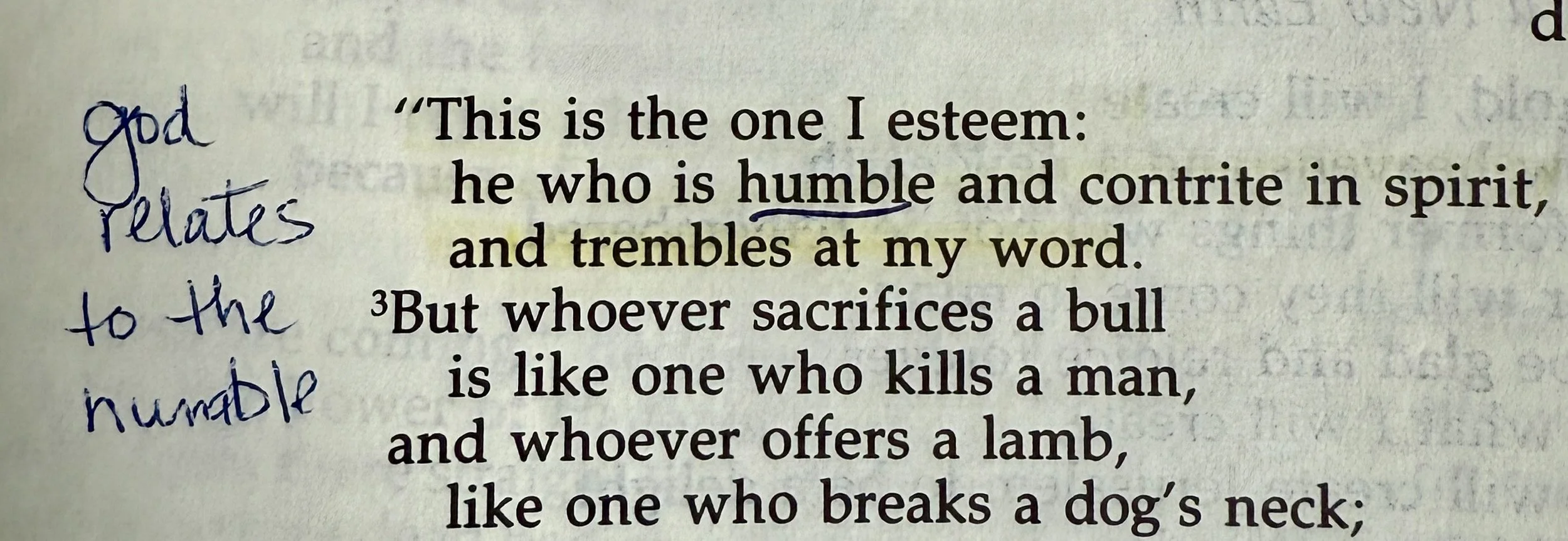
From my perspective, I wish she’d felt more pride. I wish she could have owned that she was a hardworking single mom who survived a lot of adversity. I think if she’d actually embraced pride, she might have been able to see her worthiness, she might have seen who she actually was.
In my case, I’ve always struggled with a story that my emotions are too much, and they were too much for my parents. I had a short temper, and I was often overwhelmed by rage or paralyzed with anxiety. In hindsight, I can see that I was almost always deeply dysregulated but I learned to internalize my experience.
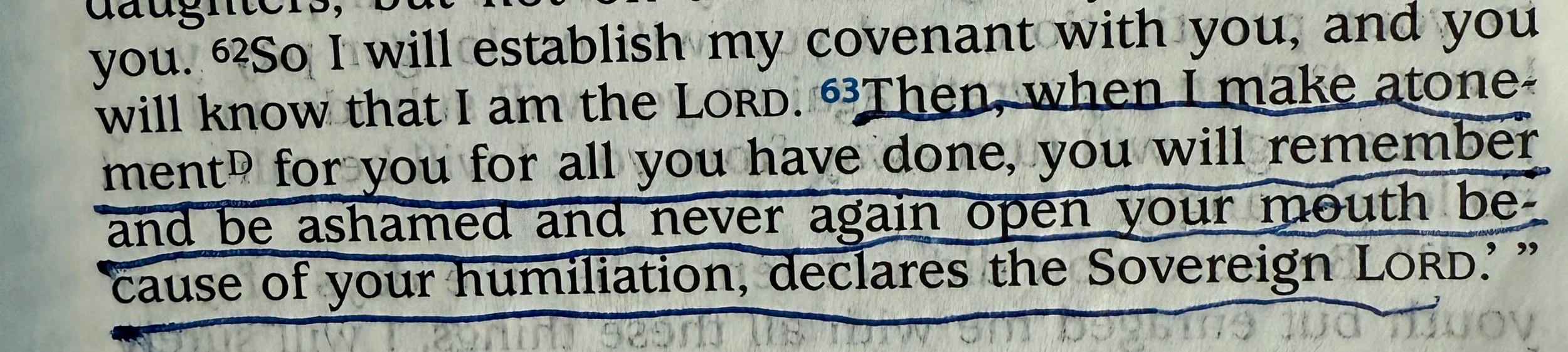
The emotions and their intensity never went away, but I developed a super strong poker face. I knew no one was interested in what was happening inside, so I just kept it in there. I sought out verses that supported my repression “a fool gives full vent to his anger”, I was told and believed that my ability to keep my feelings at bay, far away from other people, was a virtue.
Can you guess one of the major issues I’ve had in my relationships ever since?
That people can’t tell how I feel.
That people don’t know what I’m thinking.
That I must not care strongly about someone because I don’t “show” it.
The problem was never my feelings, but I was made to believe that they were. The actual thing is my emotional withdrawal.
The things we do to compensate for the things we’re ashamed of have a way of wanting to burst forth - what we keep in the shadows shoves us and itself into the light. We have to decide if we should keep shoving it back.
Because we both didn’t feel good enough, she spent her whole life and I’ve spent most of mine trying to find the secret formula, magic spell, or devotional practice that would “fix” it. Fix ourselves.
Her notes are full of admonishments to tithe, give, pray multiple times a day, lose weight, put God first - they’re all attempts to solve the problems caused by this sense of inherent unworthiness.
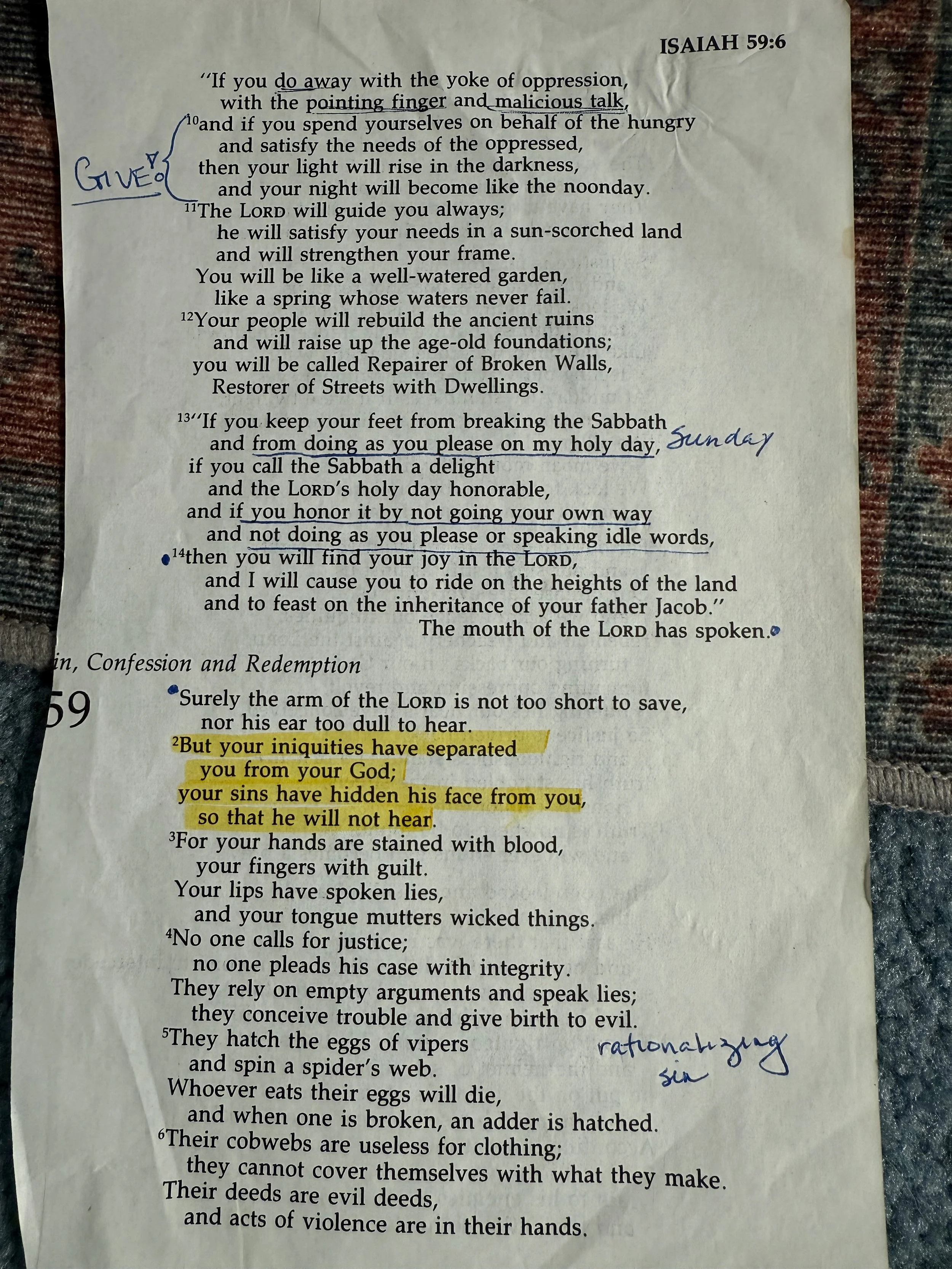
I struggle with this to this day, the amount of times I think “if only I could just [exercise more, eat the right diet, make more money, abandon all my vices]” then my life would be better. I would be better.
But I’ve cultivated another side of myself, one who doesn’t fully buy into the formula narrative and it actually came from embracing the total hopelessness of it all.
If no one was going to rescue me, and I was too worthless to rescue myself, then maybe I just need to accept that none of it actually matters.
In ACT, it’s called creative hopelessness.